

The Elusive Balancing Act: Work Life/ Personal Life

January 11th, 2010

It’s the topic that seems to defeat all working spouses and parents.  It’s the topic that has been the subject of monthly feature articles in various magazines for more than 30 years.  It’s elusive, and regardless how sophisticated our business models become there is one challenge that plagues those of us in the workforce.  It is simple at its core and yet complicated to manage.  It is unparalleled in its scope and it is quite simply this, “how do I find a balance between my work-life and my personal / family life?” 

This is not another article of tips on how to manage your time better or juggle schedules.  As a CEO and an author on leadership, my perspective is quite different.  I don’t think the issue is time or finding enough of it.  I think the problem is you not knowing when you’ve actually found that balance.  You cannot determine whether or not you are being successful unless you establish success criteria

First, there must be some metrics around this “balance”.  How will you determine success?  Is it a pure measure of time spent in each area?  Or is it a quality versus quantity issue?  Ah-ha, now we are stepping into the grayer area.  In order to determine whether or not you have completed a project successfully, it usually must be completed on time and within budget.  Pretty straightforward, right?  That time and budget are set up at the beginning of the project and then managed to completion.  So, how will you know that you’ve struck that magical balance in your entire professional life, unless you set goals or success criteria in the beginning? That means, you must decide what success is defined to be for you, in each aspect of your life. You must decide what professional success is, and that is not very easy. You must actually also decide what you are willing to pay in the way of “sacrifice” or “tradeoff” in the rest of your life-work balance. Career success, does not come without a price. It takes substantial time, energy and emotional commitment to become a winner in your professional life. Are you willing to pay that price? If not, then you need to be prepared to accept a level of achievement that is short of “stardom.”

Now, don’t think I’m over-simplifying this.  There is another component that really makes balancing work and home life challenging.  Again, if I use my project example, usually management or your customer defines the success criteria.  As a project manager, your responsibility is delivering that project within the criteria set by your customer.  But in the case of your work-home life balance dilemma, who determines the metrics for success?  Well, because it’s usually not you yourself, that’s where the difficulty lies.

If you have a work-life, you probably have a manager or supervisor and likely may also have a customer.  If you have a home life, you likely have a spouse or significant other, children, siblings, roommates, or even pets.  Each of these parties demands your time (quantity) and your attention (quality).  Each party must be satisfied in order for you to be successful, and the two are in direct competition with each other for both your time and attention.  They are defining your success criteria for you.  That’s where the “balance” comes in.  That’s why that balance is so elusive.  Each of the two entities has vastly different success criteria.  In order to for you to be “successful” at home, you must sacrifice either quality or quantity in the workplace—and vice versa.  Because you are loyal to each, chances are that if one “succeeds” the other will suffer.  Therefore, it will be nearly impossible for you, as an individual, to be truly satisfied or feel successful.  Does that mean that a balance doesn’t exist?  I am not saying it doesn’t exist.  I am saying it entirely depends upon the demands of your work-life and your personal life. 

In short, the work-life balance is decided by evaluating the tradeoffs in your life and work. During my life, I have been blessed with a life partner, a loving wife, who helped me balance my commitment to her and our family, while allowing me to focus on my work passions. We have been a team, and the tradeoffs that I made, were ones she bought into. Hence, conflict between work and life never really existed, because my work and life were intertwined and my wife bought into what I was doing at work and became a part of the decision process. Candidly, if you are all blessed with this type of relationship, balancing your work-life balance will be a “piece of cake.”

3 New Years Work Resolutions for a Productive Year

December 23rd, 2009

1.  De-stress with Humor- As things become more stressful in your work environment, don’t forget the toll that stress has on your employees and their performance.  If stress becomes an overwhelming factor of your work environment, it is up to you as a leader to help your associates reduce that stress.  Humor can help to humanize the workplace. Herb Keller, CEO of Southwest Airlines said, “If work is more fun, it feels like less work”

Incorporating humor into the workplace does not mean you should suddenly become a comedian.  It is about lightening up the tone, mood, and atmosphere.  Humor can be a tool you as a leader can utilize in the workplace, but nevertheless it much be taken very seriously.  Even with the irony of that statement, humor in the workplace still involves some risk.  If it is taken too far, it can result in a reduction in focus and productivity.

How can we incorporate humor in the workplace without sacrificing productivity?  It can be as simple as keeping a smile on your face.   Establishing your own precedent for humor is essential, as you must lead by example.  As you and your staff become more comfortable with humor, you should share the responsibility of bringing humor into the workplace.

2.  Establish a PLAN Process – Develop respective Strategies, Goals, Action Plans & Budgets for the upcoming year. Plan them based on your best understanding of both your corporate and personal objectives. Develop clear goals and targets to be achieved by year end. Then strategize how you can achieve these goals by setting timeframes that will outline exactly how and when to reach them. Next, get into the details and breakdown the tasks.

  • FUNCTION STRATEGIES: You need to establish your function or business version of those core strategies at the corporate level. If any one of these do not specifically apply to you, you can ignore it, but these will probably still affect you since you all will be required to support all strategies.
  • ANNUAL GOALS:  Obviously, each revenue producing organization will have revenue goals, but then each organizational unit will need to have not less than five, and probably not more than ten ANNUAL GOALS that it plans to achieve in 2010. This range of the number of GOALS is not an absolute, so if you think that you need more, then you should certainly submit them.  The plan approval process can help to decide which ones are both essential and feasible.
  • ACTION PLANS:  Here we have much more specific and detailed “things you plan to do” in order to achieve the GOALS.

 3.  Spread the Love – Following your reading of my book Lead with Love, you will be enlightened by new ways to lead and incorporate Love into the work place. The next step would be sharing this love and mentoring your associates to adopt that mentality as well. Leading with Love and/or being lead with love should be a company’s team culture – not only an individual achievement.  Adopting Aloha into your management style and techniques also means sharing this Aloha with other associates.

 It’s Easy to Share the Love:

  1. Send out a daily motivational quote to your associates and partners – you can pick up a quote from my daily Twitter alerts at www.twitter.com/leadwithlove.
  2. Add your favorite quote to your email signature, so anyone you are in touch with can get some of that Aloha.
  3. Give a copy of the book to a manager or associate that deserves it.

Lead with Love this Holiday Season with Non-cash Rewards

December 18th, 2009

In this time of economic uncertainty, leaders really must pay attention to encouraging their employees and constantly motivating and reassuring them with love and rewards. While the option of giving bonuses not existing for many of us, leaders must remember that there are non-cash rewards that can be an effective way of showing gratitude and appreciation.

In chapter 6 of my book, Lead with Love, I emphasize the importance of rewards, from an incentive system like commissions, to an open door policy that welcomes honesty and encourages employees’ opinions. I believe that giving rewards is almost an art form, and that something as simple as a cup of coffee can be symbolic of success and can be seen and admired by others.

Make certain that you always remember that the message and the love are what matters. If you have children you will know it is not the price of the toy that matters to the child – It is what hits the child’s heart and mind. We all must find the reward that works best. That child will feel your love with the hug, much more than with a $100 toy.

I believe that this is the same for your staff. The hug works. It can be a pat on the back; a smile; a word of praise, or a literal hug. The recognition by you of your appreciation is far more valuable than anything else you can give. Nothing means more than to be recognized and appreciated. Imagine if you walked into a room and nobody acknowledged you at all. The impact would be devastating.

Holiday time is a great time to remember this message; The price of a gift is never really as important as the message and the love. This is never truer than when recognizing performance in the workplace.

You should never assume that you are irrelevant to your staff. Your recognition of them is your greatest gift to them. It truly says, I love you. Raises are not irrelevant, but…No raise will ever compare to your simple recognition of them and their contribution.

“Cash rewards usually are effective rewards, but you will be amazed at how effective non-cash rewards can be.” – Gerry Czarnecki, Lead with Love

Understanding the Entrepreneurial Leader’s Personality

December 10th, 2009

In November 2005, Inc. Magazine featured an interesting article on the psychology of success. The article discussed the stereotypes surrounding successful entrepreneurs and the accuracy of those stereotypes. For purposes of the article, Inc. administered the Test of Attentional and Interpersonal Style (TAIS) to nearly 250 leaders of Inc. 500 companies. The Attentional and Interpersonal Style (TAIS) inventory is a 144 item self-report questionnaire that measures twenty different concentration skills, personal and interpersonal attributes. Those specific concentration skills and personality characteristics can be thought of as the building blocks upon which more complex human behaviors depend.

Inc.’s list annually recognizes companies for growth in the thousandth percentile range. So, there’s much to be learned from these entrepreneurial CEOs—from both their successes and their failures.

Following are some of the myths that Inc. dispelled about most entrepreneurs:

Myth #1: They thrive on risk
Myth #2: They’re control freaks
Myth #3: They’re lousy at strategy
Myth #4: They’re bullies

Four “modes” that emerged as a result of the TAIS exam:

Mode #1: Driving to beat the odds
Mode #2: Adapting on the fly
Mode #3: Spotting the leverage points
Mode #4: Recruiting the world

This is pretty intuitive—rapid growth requires nimble decision-making, for example. But it’s important to note that the above factors, while instrumental in leading a company that is experiencing initial, rapid growth, may be the same factors that hamper the long-term or later stages of a company’s growth. Sprinting may be necessary to keep pace with a state of hyper-growth, but the long-term horizon should be looked at as a marathon, requiring stamina.

Do these forward-thinking leaders make mistakes? You bet they do. That’s how they get better. In a separate Inc. survey, 41 % of the Inc. 500 CEOs surveyed had started another company before starting their current company.

Interestingly enough, more and more companies are using the Test of Attentional and Interpersonal Style (TAIS) to evaluate potential job candidates, particularly at higher levels. The specific concentration skills and personality characteristics measured by the TAIS can be thought of as the building blocks upon which more complex human behaviors depend. The test results allow you to anticipate how an individual will perform under pressure. Concentration skills, and the ability to change direction are critical determinants of success or failure in a given performance situation. This is one reason why the TAIS is used around the world for the selection and training of high-level performers in sports, the military, and business.

I can tell you that I am a very good example of this information. Ever since I left corporate America, I have been an entrepreneur. I have stumbled, just like the article points out, and each time I have started another company, or been involved in another start up, I have learned. Not always by success either. There is no doubt that doing is a great deal tougher than advising. No doubt, I am taking risks, but not because I have a risk taking personality. I have taken risks, because they were seen by me as what I needed to do to be successful. I thrive on success, not on risk. Risk just goes with the territory, but I am somebody who always focuses on risk, primarily because I want to avoid it, or at least minimize it; not because I like it.

Talent Management: Where is the biggest payoff?

December 3rd, 2009

There was an excellent article in the McKinsey Quarterly last year titled, “Making a market in talent” and some valuable nuggets therein regarding talent management.

The article begins with,

Savvy companies understand the competitive value of talented people and spend considerable time identifying and recruiting high-caliber individuals wherever they can be found. The trouble is that too many companies pay too little attention to allocating their internal talent resources effectively.

It goes on to discuss why companies should maximize employees’ visibility and mobility within a company in order to gain competitive advantage. Research demonstrates that companies with enlightened talent-management policies have higher returns on sales, investments, assets, and equity. Yet, most companies spend more money on recruiting new talent than developing the talent they already have.

The issue of mobility is one that is often overlooked, forcing employees to change employers when all that may have been needed was a change in management or location within the same corporation, thus avoiding the cost to rehire and retrain. By leveraging existing talent and allowing that talent pool mobility to traverse your workforce, employee satisfaction and productivity is higher. There is also much to gain by allowing your existing workforce to learn new areas of your business. Chances are, they will feel more personally invested, as well as able to add more value due to the breadth of industry knowledge that was gained.

According to the McKinsey report, the best approach to managing talent is formalizing the talent marketplace—that is, a managed marketplace created to bind the interests of individuals to the interests of the company. IBM and American Express are two leaders in this area, but this model works especially well in very small organizations where budget to hire is restricted and employees must wear many hats. The new trend of creating talent marketplaces, when pitted against the aging HR / hierarchical model, has several benefits, the least of which include:

 Improved employee morale
 Decreased attrition and employee turnover
 Decreased costs in recruiting and retraining
 Minimizes in business disruption
 Indirect increase in corporate performance
 Increase in profit per employee
 Higher return on assets and sales
 Puts career management responsibility in the employees’ hands

Of course, there must be parameters in place for workforce mobility to be successful—for example, a timeframe within which an employee must stay in a certain role in order to ease fluidity and keep continuity with minimal disruption to the business. As more businesses figure out that creating a talent marketplace can practically increase morale, sales, profits, and decrease attrition, you will be hearing a lot more about it.

Vocabulary Lesson: Management versus Leadership

November 25th, 2009

How often does someone in middle management refer to himself or herself as a “Leader”?  How often does the title “Leader” appear on a resume?  How many middle-managers think of what they do in terms of “Leading” a team?  I would venture a guess that only the few, the proud, the natural leaders actually use this terminology. 

It’s been said that things are managed—calendars, tasks, project deliverables and that people are led.  Indeed, that may be true to an extent.  But the real difference between leading and managing is the passion and aggressiveness with which something or someone is “managed”.  Think of managing as meeting expectations.  There’s nothing wrong with that—keeping the status quo is often a full-time job.  But leadership requires exceeding expectations.  Let me give you an example:

In scenario one, our middle manager heads a department of twenty people and has been doing so for fifteen years.  Part of that responsibility is evaluating each team member’s performance on an annual basis and providing the employee and management with performance reports in the company’s standard template.  By doing this, our manager is fulfilling an obligation and responsibility of the job description.

However, a Leader would go beyond that and (in the absence of company-wide standard development plans) would actually discuss growth opportunities with employees as part of the performance evaluation process.  Mentoring is something that most managers either do not do naturally or think they have time for.  But leaders will take the time to groom employees with potential, recognizing that in the long run, it makes us better leaders.  It also sets an example.

If you think back to the various “bosses” you’ve had on all of your previous jobs, there will (hopefully) be one or two that stood out in your mind as natural leaders.  No doubt there were characteristics that these people all shared that set them apart.  They were not “9-to-5”ers, they actually cared about their employees and employees’ long-term goals and satisfaction, they took risks both in business and with employees because they saw a potential payoff.  They may not have been the most educated, and they were not afraid to make mistakes.  A born leader seldom plays it safe. 

Although I am not certain that there really are born leaders, leadership does not come from just being called a leader. In the world of politics, politicians are elected to their positions of “political power” and are called leaders. The problem is, many of them have never had real experience at leading. The may have leading ideas; they may have been in policy positions but few have actually ever actually been “in charge.” Yes, they may have had influence; they may have been engaged in very high level positions, but seldom have they actually been in a place where they were accountable for being “the decision maker” or “leaders” of a group. This applies to almost everybody who has been in the legislative branch.

Happy Birthday Peter

November 19th, 2009

peter_drucker


November 19th is the birthday of a man for whom every leader/manager should dedicate a moment of reflection and appreciation. This man had a profound impact on the academic and the practical world of management. Indeed, he is frequently credited with being the “father of modern, professional management.” He was Austrian born, had a Doctorate in Laws, and became the most read and quoted writer on management in history. His book, Management: Tasks, Responsibilities, Practices, represents a landmark work that essentially set the standard against all books on management are measured against. Indeed, all of his writings cover such a breadth of topics and insights, that there are few ideas about leadership and management that he did not explore.

This management thinker had a truly profound impact on me. I read everything he ever wrote, and found his insights powerful and timeless. He wrote 39 books and his ideas permeate our current thinking. He coined the term “knowledge worker” and was intensely focused on how the work place was dramatically changed by the emergence of workers who used their minds instead of their muscles. He taught and wrote until he was 92 years old, and continued with profound thoughts until his death at 95.

By now, all of you who have ever read a leadership or management book, know that this is the birthday of Peter Drucker. Drucker truly created the profession of management, but most importantly, he knew how to balance the mechanical aspects of planning, organizing, controlling and directing with the true role of the manager, the leadership of the humans who execute the work. Drucker was particularly concerned about the need for managers to focus on the changing society and how they needed to change with it. He knew that the “knowledge worker” was where the future work place was, and he admonished us to recognize that leading the knowledge worker was a very different challenge than overseeing the manual labor of the farm or the factory of the 19th century.

My writings, and the use of the word Love, I believe would not have shocked Peter Drucker, because he knew that the staff we lead, is the key to organizational success. He was a very warm and philosophically controlled intellectual, who could walk in the halls of academe with great presence and credibility; while in the next minute consult with the leaders of organizations from very small to very large. He had a keen sense of understanding the challenges of leadership, and could dispense sound and actionable advice to any who were open to learn. He was truly a teacher and mentor to leaders, worldwide, but his great love was to help professional managers in the world of work that was mostly entrepreneurial and corporate life.

Although I believe that Lead with Love is a substantial contribution to the current thinking of leadership, in part, I think that it is because so many managers/leaders have lost the vision of Peter Drucker. In essence, Lead with Love is a journey “Back to the Future.” Yes, I am asking everybody to reach back to the truths from a visionary and mentor named Peter Drucker, and admonishing every leader to revisit his wisdom.

I stress the Love concept because we must think of the whole person and the whole organization and recognize that the humans who work in it, are the key to its success. There is no way that the old “straw boss” mentality from the cotton fields or the hard core 19th century factory, can work in a world of knowledge workers. These workers are smarter, better educated, better trained and rewarded for their ability to think. We must love them if we are to understand them, let alone lead them. I am convinced that Peter Drucker would be using the very same terms to describe the concepts we insist on in Lead with Love.

I, for one, will pause on the 19th and remember the great debt I owe him for helping me find my way through the challenges of management theory and practice. Much of that transition is because I listened to Peter Drucker as a student of leadership, and a manager who wanted to be a better leader. I am only the thinker and practitioner that I am, because I discovered the greatness of his thought, and allowed myself to develop my own thoughts about how to become a man who learned how to Lead with Love.

Loving enough to let go

November 10th, 2009

When was the last time you fired somebody? Did you enjoy it? If you did, you really need to look at yourself and ask if you are in the right job. Every time I have been forced to, or should say, have decided to terminate somebody, I have struggled for days. When I know that this is the day I need to terminate an associate, I am afraid the pain starts very early, and the strain shows up in my voice and in my heart rate. I am an early bird at work, and on days that I must terminate an associate, I am almost always up at least an hour earlier than normal. Worse still, even though IO normally sleep through the night, there is a high probability that I will have awaken at least once during the night.

I will be at the office early, and I will be nervous wreck. Yes, the tough guy who “oversaw the termination of 50,000 or more IBM associates within months of arriving at the company, lost a great deal of sleep. Bt nothing when I have to look just one person in the eye and say, “Sorry, but you are not going to work here anymore.”

Am I a wimp? The answer is probably yes. I struggle emotionally with these actions, because I love them, because I will not have taken that action without having invested enormously in their success. When they fail, I almost always feel that I failed. Yet, I have never back away, and change my mind as I was about to make the termination real. Why? Because by the time I have gotten to that point, I have spent far more time working to help that associate succeed. I also know that that individual is likely to “see it coming.” Why because I will have had more than a couple of very difficult conversations about performance. In short, this will be the right thing to do, and I will do it because I know that is true.
When you fired your last person, was that what you felt?

Economics 101

October 26th, 2009

There is no doubt that most leaders in Corporate America today are focused more on survival rather than success. This is a time when the leadership principles I promulgate are perhaps toughest to live by. But, this is the very time when Lead with Love is most important.

That said, this is when the fraudulent leaders show their true colors. The plain fact is, when the boss fires people, and is enjoying the firings, he is not a Lead with Love boss. He is simply, another if the ten of thousands of bosses educate in a large number of the business schools who were taught that people are Human Resources, and they should be treated as simply “factors of production.” Yes, I am an economist by training and I can tell you that when we learned in Economics 101 in undergraduate school, that the factors of production were land, capital and labor; that made it easy to realize than when you had too much labor, you just reduce it, just like if you had too much land…just sell it.

And, when that labor does not meet your standards, just fire them and get labor that does. Well, the fact is that is true, but it is also true that as a Lead with Love boss, tough love is not mean love. Tough love is making the hard decisions, but doing them with Love, not with disdain. I challenge every downsizing manager to make certain that he understands that they are dealing with human lives.

Why Not Like Instead of Love?

October 20th, 2009

You may ask, “Why use the word love when the word like would be easier? Why not say that every leader must like people?”

For our purpose, the word love is more accurate and less confusing than the word like. Indeed, the proposition that leaders must like those they lead is flawed. When you like a person, what does that mean? Usually it means that person’s personality characteristics, core beliefs, character traits, or even physical appearance, for some reason, appeal to either your emotions or logical thought. The person may have treated you nicely, smiled at you on a day you were unhappy, complimented you when you needed confidence building, or helped you think through a personal or business problem. You may even have an unexplained bond with that person, which made you feel an emotional attraction almost immediately. You may have nothing in common or everything in common, but you feel comfortable being around that person.

read more

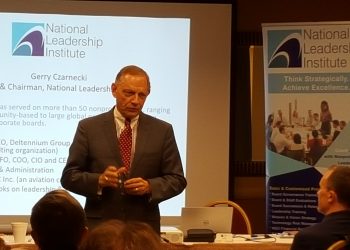
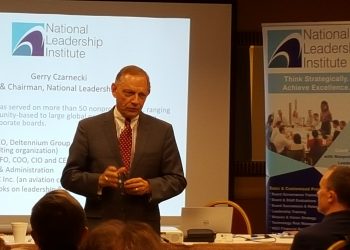
Gerry Czarnecki (also known as “The Leadership Czar”) is the co-founder of The National Leadership Institute (NLI), Chairman of the National Association of Corporate Directors (NACD) Florida Chapter, President & CEO of O2 Media, and the Chairman, CEO of The Deltennium Group, nationally recognized for offering leadership consulting, career coaching, financial planning and investment management services. Gerry also serves as a member of the Board of Directors of State Farm Insurance Company and Del Global Technology, Inc., and is Chairman of the Audit Committee of each company. He is a member of the Board of Directors of State Farm Bank and State Farm Fire & Casualty; and Chairman of the Board of Aftersoft, Inc. He is also a member of the advisory board for Private Capital, Inc.


Partnership Links

The Czar Club Deltenium O2 Media NLI